What helps people live a long, healthy, and fulfilling life?
This question has fascinated researchers, physicians, and health professionals for generations. While genetics, lifestyle, and medical care all play important roles, some of the most valuable lessons about longevity come from observing individuals who have lived exceptionally long lives.
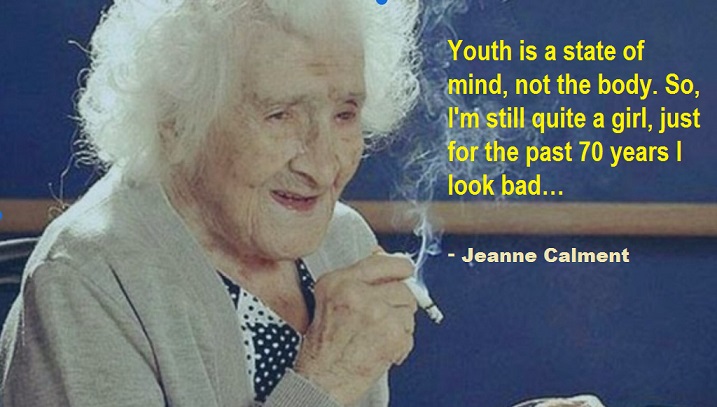
One such individual was Jeanne Louise Calment of France, who lived to the remarkable age of 122 years and 164 days, making her the longest-lived person whose age has been verified.
Born in 1875 and passing away in 1997, Jeanne witnessed dramatic changes in society, technology, medicine, and culture. Throughout her life, she became known not only for her extraordinary longevity but also for her vitality, humour, and positive outlook.
A Life Lived Fully
Jeanne remained active well into old age.
She learned fencing at the age of 85, continued riding a bicycle at 100, appeared in films at 114, underwent hip surgery at 115, and remained mentally engaged throughout her life.
Her story reminds us that ageing is not simply a matter of years. It is also influenced by how we approach life, challenges, and change.
What Researchers Observed
Scientists and longevity researchers studied Jeanne’s life in an attempt to understand the factors that may have contributed to her exceptional lifespan.
Interestingly, her habits did not fit the image of the “perfect health enthusiast.” She enjoyed chocolate, occasionally drank wine, and smoked for much of her life.
Yet researchers frequently commented on another characteristic that seemed to stand out: her remarkable emotional resilience and ability to remain light-hearted.
One of her most famous sayings was:
“If you can’t do anything about it, don’t worry about it.”
Whether this attitude contributed directly to her longevity cannot be proven. However, her approach to life offers an important lesson about the relationship between stress and wellbeing.
The Hidden Impact of Stress
Modern research continues to demonstrate that chronic stress affects many systems within the body, including the nervous system, immune system, cardiovascular system, and hormonal balance.
While occasional stress is a normal part of life, persistent emotional strain can influence both physical and psychological health over time.
Jeanne’s example suggests the value of developing emotional flexibility—the ability to adapt to challenges without becoming consumed by them.
The Role of Joy and Humour
Another striking feature of Jeanne’s life was her sense of humour.
She was known for her wit and ability to laugh at herself and at life’s challenges.
Among her famous comments were:
“Always keep your smile. That’s how I explain my long life.”
And:
“I’ve only got one wrinkle, and I’m sitting on it.”
Humour may seem trivial, but it can be a powerful resource for resilience. Laughter helps us gain perspective, strengthen social connections, and navigate difficult situations with greater ease.
Beyond Diet and Exercise
Healthy eating, movement, sleep, and medical care are all important components of wellbeing. However, Jeanne’s story reminds us that health is about more than physical habits alone.
The quality of our emotional life, our relationships, our sense of purpose, and our ability to enjoy the present moment may also contribute significantly to our overall wellbeing.
A Liminal Perspective
Within the Liminalis Method™, wellbeing is viewed as a balance between physical, emotional, mental, relational, and spiritual dimensions of life.
Jeanne Calment’s story highlights an important principle: longevity is not only about adding years to life. It is also about bringing vitality, meaning, humour, and resilience to the years we have.
The Real Lesson
The true lesson of Jeanne Calment’s life may not be found in any single habit, diet, or health strategy.
Instead, it may be found in the way she approached life itself—with humour, adaptability, curiosity, and a refusal to be overwhelmed by circumstances she could not control.
While none of us can guarantee how long we will live, we can influence how we live.
And perhaps that is one of the most important lessons of all.